Showing posts with label writing. Show all posts

Thursday, May 22, 2025

creating and making words

I was recently confused by someone who was using creating and inventing (& creator and inventor) interchangeably. I found this confusing. There must be a difference, and it may be useful to understand it.

I came up with these definitions for various creativity-related terms. They're not perfect, and there are exceptions, but sharing here as others may find this useful.

Make - To produce something
Create - To make something that has existed before
Invent - To create something that has never been created before
Innovate - To create something by combining existing things or ideas in a new way
Design - To create something for a specific need or purpose

But what about "creativity'?
In my experience, I believe this is mostly used as a shorthand for idea creation. Being creative means coming up with lots of ideas, possibly using invention or innovation, and seeing how they can meet a need or requirement.

Tuesday, March 25, 2025

Monday, November 04, 2024

not writing about the cutting edge

I think and write slowly - often in combination.
Others are keen to talk/write/speculate about the latest shiny things.
I want to understand how the latest shiny things fit into larger trends and the overall/long term tends.

My first book followed a structure from a presentation first given 6 years earlier and then refined over that time (and the 18 months I spent writing it.)

My next book is in 3 parts.
Part I has its roots in a document I wrote over 20 years before.
Part 2 is based on my own checklist, that I've been building for more than 5 years.
Part 3 is based on a revelation I had and then spent 2 years actively trying to disprove with conversations with hundreds of developers. (Repeatedly asking people to tell me why I'm wrong - was a new, but ultimately enlightening and encouraging experience when no one had an answer.)

Anyway, there's another book coming.
Progress is slow, but I keep discovering new things that must be included and the result wouldn't have been as good if I'd missed them out or if trying to retrofit them into something already written.
Yes, this might be me trying to find excuses for not seeming to have made more progress.
Still, I'm excited for the book and look forward to sharing it's lessons in the (hopefully not too distant) future.

Sunday, April 07, 2024

Reflecting on 1000+ blog posts

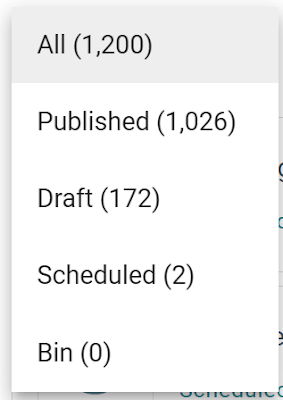
1200 posts, 1026 published, 172 drafts, 2 scheduled
These are the current numbers for my blog. (Well, at the time I first started drafting this. I expect it will be several days before it's posted and then they will be different.)

These are the numbers I care about.

The one most other people care about is 2,375,403. That's the number of views the articles have had.

But this isn't a post about statistics. This is a post about motivation and reward.


I started writing this blog for me.

That other people have read it and got something from it is a bonus.

If I were writing for other people, I would write about different topics, I would care about SEO and promotion, and I would have given up writing sooner.

I get lots of views each day on posts that I can't explain.

I know that most views of this blog come from "the long tail," and Google points people here because there is a lot of content. The fact that I've been posting for 17+ years also gives me a level of SEO credibility.

There have been periods where I have written very little. This is fine by me. By not forcing myself to publish on a particular schedule, the frequency of posting doesn't hold me back or force me to publish something for the sake of it.

I publish when and if I want to.,

Some people need and/or benefit from forcing themselves to publish on a regular schedule. If that works for you, great. If it doesn't, that's okay, too.

Others might think a multi-month gap in posting is bad, but if that's what I want or need, it's okay. Over a long enough period, the gaps are lost in the overall volume of posts.

I'm only interested in writing things that don't already exist anywhere else. This probably holds me back from getting more views than if that were my goal, but it probably helps me show up in the long tail of niche searches.

And yet, some people still regularly show up and read everything I write. Thank you. I'm glad you find it interesting.

Will I keep writing here? I can't say for certain but I have no plans on stopping.


I'm only publishing this post because I thought I might find it useful to reflect on all that I've written, and 1000 posts felt like a milestone worth noting, even if not fully celebrating. Originally, I thought I'd want to write lots about this, but upon starting it feels a bit too "meta" and self-reflective. I don't know what the benefit is of looking at the numbers. What I find beneficial is doing the thinking to get my ideas in order such that they make sense when written down. That's, primarily, why I write. :)


Tuesday, March 12, 2024

Reverse engineering a workshop

I've been working on writing a technical workshop. I've not done it before, and I couldn't find any good, simple guidelines for creating such a thing.

Having asked a few people who've delivered workshops in the past, the advice I got was very generic and more about the workshops they've proctored rather than how to structure one or put one together.

So, rather than make it up, I started by trying to reverse engineer what good workshops do.

I want the workshop to be fully self-paced and self-guided. If it can be used in group or "instructor-led" scenarios, that'll be good, too, but I don't have any plans (yet) for this.

From looking at many workshops I've completed and thinking back to those I've participated in in the past, I was struck by how many take the approach of showing a completed project and then simply listing the steps to create it. I find this approach to often be disappointing.
Yes, as a participant, I get the satisfaction of having created something but it's not something new or necessarily specific to my needs. More importantly, the reasons for each individual step weren't explained, and the reason for taking an approach when others are available (or even what the other approaches are) wasn't given. This means that I don't get the wider knowledge I likely need to be successful. Is the intention that in completing a workshop, you have the knowledge to go and build other things and the confidence to do so, having done it once before? It probably should be. 

What I find many workshops end up doing (intentionally or otherwise) is providing a series of steps to recreate a piece of software and assuming that's enough for the participants to then go off and successfully create anything else.

Yes, saying, "Anyone can follow our workshop and create X", is great. But that's not the same as a workshop that teaches reusable skills and provides the knowledge needed to go and create your own software.

I want to create a workshop as a way of teaching skills and introducing a different way of thinking about a topic.


Aside: what's the difference between a workshop and a tutorial? I think it's that workshops are longer. Possibly a workshop is made up of a series of tutorials.


After initially struggling, I eventually concluded that a workshop is like teaching anything else. With clear learning goals and a structure, it's a lot easier to plan and create.

In this way, writing the workshop was a lot like writing a book. Only without an editor chasing me for progress ;)

More thoughts on this topic another day. Maybe.
Although, it has got me thinking about what I'll write next...


If you're interested in how my efforts turned out, you can see the results of them here.

Sunday, March 03, 2024

Lack of nuance

 No nuance is almost always incorrect!


Yes, "almost" is very important in that statement.


If you get a response/answer/instruction without any acknowledgement of the nuances, you're almost certainly not getting the full picture. 

How do you know the importance of what is missing, if you don't know what's missing?


Wednesday, February 28, 2024

Reviewing documentation is like reviewing code

 Two quick, but key points.


1. What is it meant to do? And, where/what/who is it for?

You can't review code fully unless you know what it's meant to do. You might be able to point out if something doesn't compile or account for an edge case that hasn't been covered, but if you can't say if the code does what it was meant to do, you can't provide a useful review.

It's the same with documentation. If you don't know what the document was intended to achieve, communicate, or teach, how do you know it is correct, appropriate, or does what it's meant to?


2. Take advantage of tools before you involve people.

Use spelling and grammar checkers before asking someone to review it.

It's like asking for a code review on code that doesn't compile or meet coding standards.


Saturday, February 12, 2022

Some quick thoughts about writing a first book

A few times in the last couple of months, I've been asked about the writing process from people who are thinking about or planning to write their first technical book.

Here are some of the things that I'm telling those people. I'm putting it here because others might be interested and because it will make it easy for me to find (and refine?) in future, if necessary.

  • It's LOTS of hard work. It is very unlikely to earn you much (any?) money. (Especially if you're used to being well paid for your time as a developer.) Are you sure you REALLY want to do it? 
  • Be prepared to spend (you should be spending) more time planning and re-writing that writing.
  • Interview the publisher. Assess if you want to work with them like you would (should) any employer. Do you get on with these people? Do you want to spend lots of time talking with them? Can you trust them?
  • Speak to authors who have worked with the publisher before. Find ones with good and bad experiences. Find out who at the publisher the author worked with. It's the people that matter more than the publisher as a whole.
  • Understand why the publisher wants a book on the subject, and why they think you'd be good to write it.
  • Technical reviewers are at least as important as the editor. Get lots of feedback from the technical reviewer on your detailed outline for the book. They'll help avoid any big issues not being identified until it's too late (there's not enough time) to fix them.
  • Write ALL the code before estimating the wordcount for a chapter. If your book is mostly going to be explaining code or APIs. Yes, this means you have to have a really detailed plan and have done a lot of the work to be able to write the outline and before you sign a contract and start "writing" the book. For reference, I think four lines of text to every one line of code is a good guideline as it's explaining, not just showing the code that's important. You'll also discover that code is actually a lot more lines of code than you imagine in advance.
  • Have a backup plan for what to do with your planning work even if you don't finish the book. (A series of blog posts is an obvious answer.)
  • Avoid working with a publisher that has very strict structure and expectations for a "type" of book if that's not what you want to write. You probably won't get as much support as you'll want/need and it's harder for them to help you.
  • Triple check everything. If it's your name on the cover people will attribute any mistakes or issues to you. (Don't always rely on other people using the change tracking functionality of software or documents correctly.--Guess how I learned this.)
  • Ask the publisher for the guidance they give to new authors after they sign the contract, but before you sign a contract. These guidelines often include lots of useful information that will help you write the outline--that will lead to the contract. Consider it a red flag if they won't share it. Speaking of which...
  • Trust your gut. I've not (yet) met any authors who had doubts about a publisher at the start but they turned out to be unfounded. I have met many who wish they'd paid more attention to the things the red flags they saw early in the process.


I hope this helps.

Wednesday, January 12, 2022

Reasons to ask a question

I've been thinking a lot about communication (I know--fun, right?!) and especially about questions. This is because asking and responding to questions (not just answering them) is a large part of communication.

So, 12(+) reasons to ask a question:

  1. To get an answer.
  2. To force others to think about the question's topic.
  3. To encourage someone to think about how they'd answer (even if they don't.)
  4. To get attention. 
  5. To get a response (that isn't a direct answer.)
  6. To show (admit?) that you don't know (everything.)
  7. To show a willingness to learn.
  8. To show that asking questions is good/ok/acceptable/encouraged.
  9. To show an example of questions that can be asked.
  10. To show that you've thought about (or researched) the subject enough to be able to ask smart, informed, appropriate questions.
  11. So others can hear the/their answer.
  12. Never for no reason. 
  13. Other?

I know the above is a generalization, and it won't apply to all scenarios but is a helpful summary of the things to consider.


Tuesday, December 21, 2021

Are technical computer books supposed to make you laugh out loud?

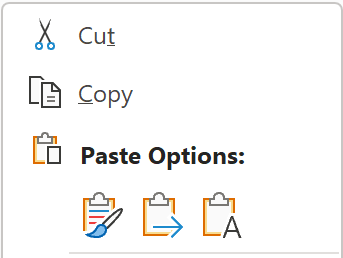
If you are using the digital version of this book, we advise you to type the code yourself or access the code from the book’s GitHub repository (a link is available in the next section). Doing so will help you avoid any potential errors related to the copying and pasting of code.

Honestly, I laughed out loud when I first read this.

Do you find manually retyping something (already in a digital format) less error-prone than copying and pasting?

cut, copy, and paste icons

Am I unusual in finding copying (& pasting) something being less likely to result in any potential errors than typing it myself?

I get that typing something yourself can help when you're learning something and want to be clear about what code you're adding and why. But, cutting and pasting has always been less error-prone than typing.


Monday, December 20, 2021

Questions to ask BEFORE asking a question

I've been thinking a lot about communication (I know--fun, right?!) and especially about questions. This is because asking and responding to questions (not just answering them) is a large part of communication.

So, 12(+) questions to ask yourself before asking a question:

  1. Can I work out the answer myself?
  2. Can I find the answer myself?
  3. Will the person I'm asking know the answer?
  4. Can they know the answer?
  5. Will they be able to give me an answer if they know?
  6. What will it cost them to answer?
  7. Will this impact my ability or opportunity to ask other questions?
  8. Will others want to know the answer?
  9. Have others asked the question before? and what, if any, answer did they get?
  10. Why isn't the answer easily/already available?
  11. Is this the best time to ask? And if not, when is?
  12. Have I been paying attention to what has been said already?
  13. Other?

I know the above is a generalization, and it won't apply to all questions but is a helpful summary of the things to consider.

Not all are always relevant, appropriate, or useful, but all are worth considering before asking (or even answering) a question.

Sunday, December 19, 2021

Questions to ask BEFORE answering a question

I've been thinking a lot about communication (I know--fun, right?!) and especially about questions. This is because asking and responding to questions (not just answering them) is a large part of communication.

So, 12(+) questions to ask yourself before responding when asked a question:

  1. Do I know the answer?
  2. Can I tell them the answer? (If I know.)
  3. Should I tell them the answer?
  4. Why do they want to know?
  5. What assumptions do they have that have led to (or are evident from) the question?
  6. Why do they think I know (or can get) the answer?
  7. What will they do with the answer I give them?
  8. Is there something I can give them better than the answer to their question?
  9. What led them to ask this question?
  10. Are other people likely to have this question?
  11. Where else can I share this answer?
  12. What type of answer are they expecting? (long, short, etc..)
  13.  Other?

I know the above is a generalization, and it won't apply to all questions but is a helpful summary of the things to consider.

Not all are always relevant, appropriate, or useful, but all are worth considering before answering a question.

Sunday, November 28, 2021

How to respond to a question?

I've been thinking a lot about communication (I know--fun, right?!) and especially about questions. This is because asking and responding to questions (not just answering them) is a large part of communication.

So, 9(+) ways to respond when asked a question:

  1. Ignore the question. (& the person asking?)
  2. Refuse to answer.
  3. Admit that you don't know.
  4. Admit that you can't answer. (yet?)
  5. Use the fact that the asker has now stopped talking and take the opportunity to talk about what you want to.
  6. Pick a word from the question and talk about that. (Because not properly listening, or as a way to avoid answering the question directly.)
  7. Talk about a topic related to the question. (Because that's what you want to talk about, or as a way of avoiding the actual question.) 
  8. Directly answer the question.
  9. Provide information/suggestions/ideas related to the question that will allow the asker to find (or decide) the answer themselves.
  10. Other?


I know the above is a generalization, and it won't apply to all questions but is a helpful summary of the options that are generally available.

 Not all are always possible, appropriate, or useful, but all are worth considering before asking (or even answering) a question.


Thursday, November 25, 2021

I learned a shocking secret about many technical books

One of the reasons I wrote a book about the Uno Platform with a new publisher was to learn more about the book publishing process so I can look to self-publish in the future. One of the things I learned shocked me.

This fact is that, apparently, many authors don't check that the source code that they include in their books actually works! Additionally, many editors and publishers don't check that the source code that they include in their books actually works either!

I didn't want to be like this.

As part of my process for testing and verifying that everything a chapter was complete, I'd work through the contents of a chapter, following each step and making sure that it included everything exactly as it should be. This would mean starting with a new project, following each step as written, and copying (cutting and pasting) the code into the editor as I went.

For each chapter I wrote in the Uno book, I did this whole process at least three times. Not wanting to rely on assumptions or trust that what I thought I'd written, or knew what to do matched what was in the manuscript. I'd repeat the process after each round of reviews and when I made big changes to the order of steps or the code so that everything still worked as intended.

For the final round of my testing, I thought it might be an interesting artifact to record the process and so I did. Below are videos for the chapters I wrote showing how I went through each chapter to check all the instructions (& code) worked. Sorry, the sound isn't great but hopefully it's good enough if you really need to hear it.


Chapter 4 - https://youtu.be/OTr1yT_4W_g

Chapter 6 - https://www.youtube.com/watch?v=CIpMcKmTehA

Chapter 8 - https://www.youtube.com/watch?v=oGyMGEut5Zw

Any questions about these chapters (or the book in general) I'm sure you can work out how to get in touch ;) 

Monday, August 30, 2021

Creating Cross-platform C# Applications with Uno Platform

That sounds like a good name for a book. Doesn't it? ;)

And it is.

Book cover: Creating Cross-platform C# Applications with Uno Platform

I know that when I finished my first book I made a specific point of calling it "my book and not my first book."

Save your judgment.

Like most writers, after finishing my first book, I wasn't in a hurry to ever write anything again.

But things, and times, change.


While I wasn't in a hurry to write another book I was still using writing as a way to communicate and pass on information.

Last year, I realized there were specific things I didn't know about the writing process and set out to understand them better. I wanted to learn so I could be a better writer and communicate more effectively. So, I spent much of the first pandemic lockdown reading books about writing, watching videos about writing, listening to podcasts about writing, and attending online workshops about writing.


Fast forward to earlier this year, and I was approached about writing a book about Uno Platform.

I wasn't in a position to write a whole book but the publisher called my bluff and agreed to me becoming a contributor to one. I figured I could write four chapters of a book and learn more about the process that would help me with my own future self-publishing plans. (More details of these at another time.) It would also be a way to test if I could apply what I'd been learning.

When it suits me, I can be quite assertive and I had strong ideas about what this book should and shouldn't be. I was keen that if I was writing the book, it would be distinctive. There's no point in me doing what just anyone could do. I wanted to make this my own. (Well the chapters I was writing, at least.)

When it comes to technical books there is a convention that over the course of the book the reader will build a basic app and each chapter will add to it as a way to learn about and demonstrate, a new feature or area of functionality. I didn't want to do this and my reasoning is threefold:

  1. I didn't want it to be like every other book. 
  2. I'm not a fan of this convention as it tends to strong-arm features into an app in an unnatural way. I knew trying to do something I'm not a fan of would be frustrating and as writing a book is already a slow, hard, frustrating process this wouldn't be good for my sanity or motivation.
    (I mean no offense to people who write such books. I have great respect for you as you're doing something I can't.)
  3. Most importantly, it didn't fit the subject. 
    Uno Platform enables the creation of an app that can be compiled for multiple platforms but the number of cases where it is appropriate to have the same app run on all those platforms is very small. Instead, I thought it more appropriate to show how Uno Platform can be used to create apps for a number of different scenarios that demonstrated appropriate features running on appropriate devices/platforms.
So, instead of a book that walks you through building one app over the course of many chapters, this book shows how to create multiple apps, one per chapter. The goal is to show how Uno Platform could be used within an organization that needs to build lots of different kinds of apps (both internal and public-facing.) My hope is that when you see the organization we use, and the variety of the apps of apps we create there will be something you can relate to and is comparable with the apps you are considering building.

The book attempts to answer the question "Can I use Uno Platform to build the apps I need to?"
Obviously, there's some theory and an explanation of when and why you would use Uno Platform, but my hope is that by showing how Uno Platform can be used to build some very different apps, that run on different devices (mobile, desktop, and web) you'll see where and how you could be using Uno Platform too.

Is this ambitious for a short, introductory book?
Will I learn that all those other books only build one simple app because it's better for the reader than building many apps?
Will everyone involved have the same vision for the book as me?
Possibly.
You'll have to buy it to find out.

Thursday, March 04, 2021

Never just "should"!

 TLDR: never use "should" without explaining why.

It should never have come to this
Photo by Brett Sayles on Pexels

How many times today have you used the word "should"?

"You should do X."
"They should do Y."
"It shouldn't be like that."

Or any variation on that theme?

"should just" is even worse.


"You should just do X."

This use of "just" implies it's simple or easy to do. It implies little effort will be needed. But, that isn't always the case.
What may be simple for you may not be for someone else. 
What may seem simple from the outside belies what may actually be required to make it happen.

Avoid saying "just" when it implies simplicity unless it's something you're doing and already know how to do.


"Should" is more complicated.

You may be familiar with the MoSCoW method of prioritization. I was taught this at university and have never liked how vague and open to interpretation the categories still are. I've been in far too many meetings throughout my career that have come down to different understandings of what needs to be delivered. In these situations, "should" is either considered to mean:
  • It would be nice if this was included, but it isn't strictly necessary. 
  • It's used to indicate or identify something that can be deferred until another time.
  • Or it's understood to mean something that can only be left out without a VERY good reason. 
"Should" can cause confusion.

Or, maybe you're used to seeing SHOULD in documents where it takes the definition from RFC2119.

3. SHOULD

This word, or the adjective "RECOMMENDED", mean that there may exist valid reasons in particular circumstances to ignore a particular item, but the full implications must be understood and carefully weighed before choosing a different course.

This is the crux of my issue. It admits that there are one or more reasons why something should or shouldn't be done.

If you say that "something should be done," why should it be done?
Because of your personal preference?
Because of a contractual reason?
Because of knock-on effects and dependencies or consequences elsewhere?

Without knowing the reason(s) that something "should" be done, we're forced to guess.

If the person saying "we should do X" has the ultimate authority to make decisions, then knowing why has less importance. It might be helpful, useful, or empowering to understand why, but it's not essential. 
In this scenario, a different word is more appropriate. "Please do X." is more specific and more helpful. Even if it's a bit abrupt, it's better than adding unnecessary and potentially confusing words.

If not direct instruction, knowing why is essential. If an opinion, we may be free to ignore it. If a contractual requirement, then we need to know to make sure it happens. If a pressing priority, time-sensitive or will have considerable consequences if not know and acted upon, then we need to know.

It might not be as severe as "you should stop that small child walking into traffic," but explaining why something "should" be done is considerate.

"You should do X" is rude.
"If you do X, it will help me..." or "if X is done first, it will unblock this other work" or "we need to make sure that we do X" are respectful and collaborative. 


Words matter.

Thursday, October 09, 2008

Controlling your life on-line

There's an argument that you should publish to the web (via blogging, etc.) to control what information is available about you.
However. You can't control everything.
You can just put the things you want to be there there.
You can't get rid of (some? most?) of the things you don't want to be there.
If you spend enough time and create enough content you may be able to influence what people find first.
But that's probably enough.  Unless there are some very bad things about you on the web, the fact you can control the first impression people will get of you, from the web should be enough.

Tuesday, September 09, 2008

Not using a system properly?

Can a user not use a system properly?

I can see how they might not use it as it was intended or designed, but properly?

Assuming that properly means the same a correctly. (http://www.google.co.uk/search?q=define%3A+properly)
If a system can be used in a way other than a correct one, doesn't that mean that the program is at best flawed or, at worst, contains errors?

I suspect that this phrase ("not using it properly") is typically used when they mean not as intended.  If that is the case it means that the program is unnecessarily complicated. Doesn't it?

Tuesday, May 27, 2008

Writing for the computer screen

Notes from article in Digital Matrix 131

Gotchas:
  1. Less reading time
  2. On-screen text is tougher for the reader - to read
  3. The computer or reader can alter the format
  4. On-screen text competes with other distractions
  5. The screen can hide errors - things can look finished, even when they aren't

Tips:
Structure
  • Use the inverted pyramid style of writing
  • Provide an overview and signposts
  • Use hyperlinks effectively
Style
  • Use smaller chunks of text
  • Write succinctly
  • Use bullet points and lists
Format
  • Leave plenty of white space
  • Avoid using italics
  • Choose your font carefully
  • Use a sufficiently large font
  • Use simple colour contrasts

Tuesday, March 25, 2008

Software documentation

There are two types of documentation which should be created for software. Those that are used internally within the company, and those that are used externally, by the customer.

Some examples:


Internal

Explanations of software.
  • What it is for
  • Who the intended users are
  • How it works
  • How it is developed
Sales tools


External

User guides

  • System requirements
  • Basic (user guide)
  • Advanced (user guide)
  • Installation
  • Upgrading
  • Troubleshooting
  • Moving an installation between machines